The New Referral Economy: What Actually Gets a Law Firm Recommended by AI
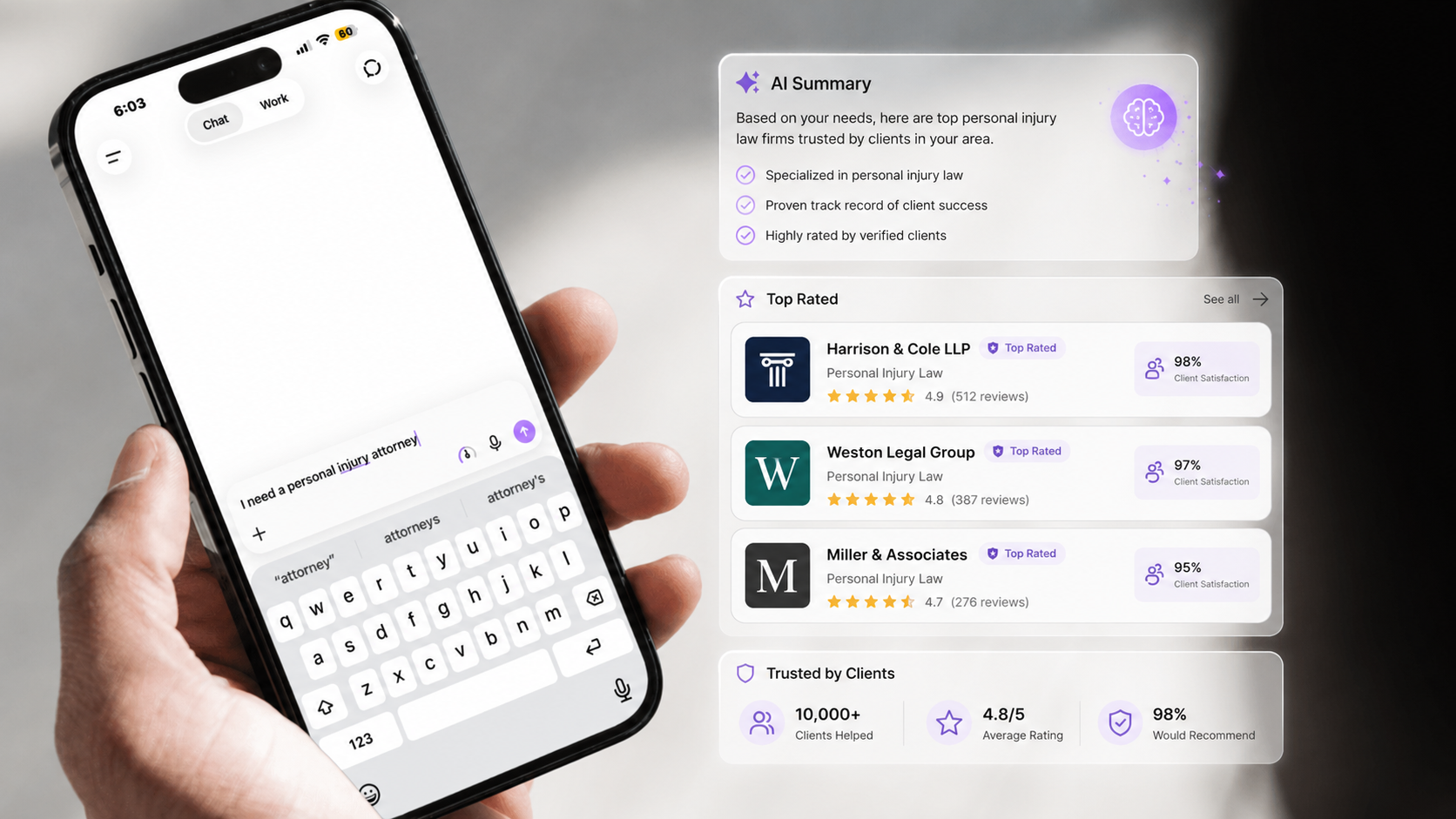
A client found his firm through ChatGPT and Claude before he ever searched Google. That's not a fluke. It's a preview.
A client of trucking litigation attorney Jay Vaughn recently found his firm in a way that is becoming increasingly familiar: not through Google, but through a conversation with ChatGPT and Claude. By the time she typed anything into a traditional search engine, she'd already been pointed toward Vaughn's practice.
We wrote earlier this year about the broader shift behind that story, clients moving away from Google toward AI tools and social platforms to find legal help. That piece was about awareness, knowing the shift is happening. This one is about mechanism. Once a firm accepts that clients are asking ChatGPT instead of Googling, the real question becomes unavoidable: what actually makes an AI system recommend one firm over another?
It Doesn't Look Like Search
Traditional digital discovery has rewarded a familiar set of tactics. Keywords. Backlinks. Paid search. Consistent publishing. An entire industry exists to help firms earn visibility in search results, and for two decades it's been money well spent.
AI discovery does not look like traditional search. When someone asks ChatGPT or Claude who to call after a truck accident, the experience is different from scanning a page of blue links. AI tools can search, retrieve, compare, and synthesize information from multiple sources into a direct response. That means the signals surrounding a firm across the web may matter alongside the content on the firm's own site.
What an AI system can find and substantiate across the web becomes increasingly important: consistent public information, credible third-party references, meaningful recognition, clear descriptions of a firm's expertise, and a track record that can be corroborated beyond what the firm says about itself.
A firm can perform well in traditional search without being equally prominent in AI-generated answers. The overlap between SEO and AI visibility is substantial, but it isn't perfect. It's still an important foundation for discoverability. It's just no longer the whole picture.
The Referral Fee Connection
Jay made a separate point in the same conversation that turns out to be closely related: referral fee sharing is one of the most expensive ways to grow a plaintiff practice. Firms have paid for visibility for years: referral relationships, ad placement, SEO retainers, because that's how the old discovery system worked. You paid to be found.
AI-driven discovery increases the value of a reputation that exists independently of paid placement. A firm can't buy its way into a ChatGPT recommendation the way it buys its way into a sponsored search result, which means what it can find and substantiate is doing double duty: it earns client trust the old-fashioned way, and it gives AI systems more credible information to work with when clients ask for recommendations. That reframes the marketing conversation itself. The question isn't which platform to advertise on next. It's whether a firm's reputation holds up to independent verification, because that reputation is now serving two audiences at once.
What to Actually Look At
For firm leaders, that makes the public record surrounding the practice worth examining more closely. Is the firm's core expertise described consistently across its website, attorney profiles, media coverage, directories, case results, podcasts, and other third-party sources? Can someone outside the firm quickly understand what it is known for and why? Increasingly, those questions are part of reputation strategy, not simply marketing execution.
Why This Matters Now
AI tools are already functioning as a front door for prospective clients in 2026. Firms that treat this as a future planning item are already behind firms that have quietly built the credible, verifiable presence these systems need to work.
The firms that get this right won't be chasing a new marketing tactic. They'll be doing something closer to what strong plaintiff firms have always done well, building a reputation that holds up under scrutiny, just with a new and increasingly important audience checking that reputation before a client ever picks up the phone.
Related Reading
This piece builds on a conversation we started earlier this year about how AI is changing client discovery.
Clients Aren't Googling Anymore: Why Law Firms Need to Think Bigger About AI
This episode of The Heart of Law with Jay Vaughn explores this shift in more detail, along with what separates a true trucking litigation specialist from a generalist firm.